

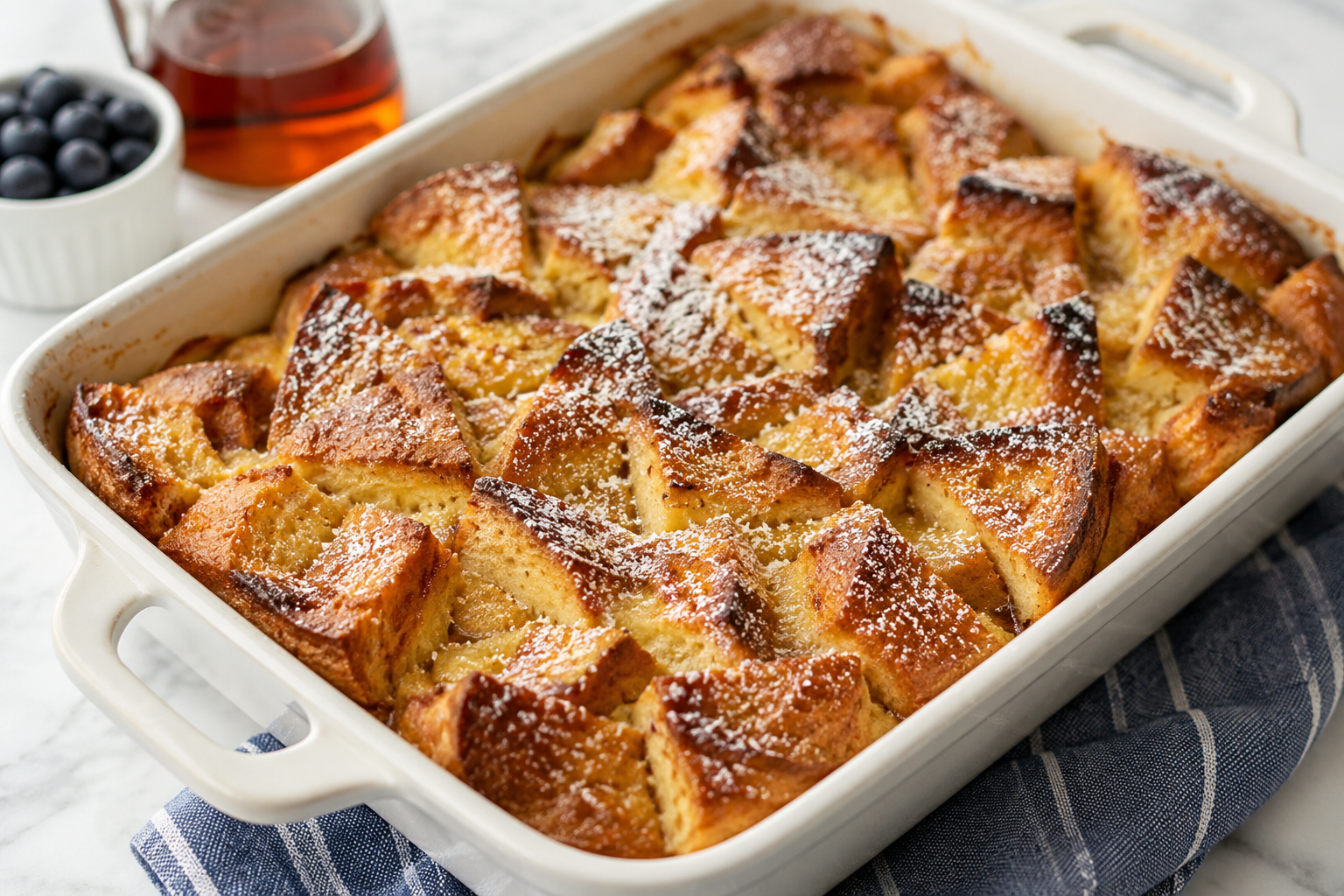
There’s a reason so many home cooks search for a barefoot contessa baked french toast casserole recipe every time they’re planning a holiday brunch or a lazy weekend breakfast. It’s warm, custardy, slightly crisp on top, and it feeds a crowd without demanding much effort on the morning you actually serve it. This style of casserole has become a go-to in kitchens across the country, and understanding why it works so well can help you make a version that turns out perfectly every single time.
In this article, we’ll walk through what makes this dish special, how it came to be a brunch table favorite, the ingredients that matter most, and the techniques that separate a soggy casserole from one with that ideal balance of creamy interior and golden, slightly crunchy top.
Why Baked French Toast Casserole Became a Brunch Staple
French toast on its own is a wonderful breakfast, but making individual slices for a table full of guests is impractical. You’re stuck at the stove flipping bread while everyone else is already eating. The casserole version solves that problem entirely.
Instead of cooking each piece separately, bread cubes or slices are layered in a baking dish, soaked in a rich egg and milk mixture, then baked all at once in the oven. This is exactly the kind of practical, entertaining-friendly thinking that has made recipes inspired by Ina Garten’s cooking style so popular. Her approach to home entertaining has always leaned toward dishes that can be prepared ahead of time, which is a big part of why a barefoot contessa baked french toast casserole works so well for hosting.
The dish also has a comforting, nostalgic quality. It reminds people of holiday mornings, family gatherings, and the kind of unhurried breakfast that doesn’t happen on a typical weekday. That emotional connection is part of what keeps this recipe searched for and shared year after year.
What Makes This Style of Casserole Different
Not all baked French toast recipes are created equal. Some turn out dry and bread-like, while others end up mushy in the middle. The version associated with this cooking style strikes a balance by focusing on a few key details.
First, the bread matters enormously. A sturdy, slightly stale bread like brioche or challah holds up far better than soft sandwich bread, which tends to disintegrate once it absorbs liquid. The richness of brioche in particular pairs beautifully with the custard base, giving the finished casserole a slightly sweet, buttery flavor even before any syrup is added.
Second, the custard ratio is intentional. Too little egg and milk, and the bread stays dry in spots. Too much, and you end up with something closer to bread pudding soup. A well-balanced barefoot contessa baked french toast casserole uses enough liquid to fully saturate the bread overnight while still allowing the top layer to bake up with a bit of structure and texture.
Third, there’s usually a streusel or sugar topping involved. This is what creates that contrast between the soft, custardy interior and the slightly crisp, caramelized top. Without it, the dish can feel one-dimensional.
The Overnight Soak: Why It’s Not Optional
One detail that trips up a lot of home cooks is skipping the overnight rest. It might seem like an unnecessary extra step, especially if you’re short on time, but it’s actually one of the most important parts of the process.
When bread sits in the egg and milk mixture overnight, it has time to fully absorb the liquid all the way through, not just on the surface. This is what gives the finished casserole its signature soft, pudding-like interior. If you try to bake it right after assembling, the outside of the bread cooks before the inside has a chance to soak up enough custard, leaving you with dry pockets and an uneven texture.
This is also part of what makes the recipe so convenient for entertaining. You assemble everything the night before, cover it, and refrigerate it. In the morning, all that’s left to do is pop it in the oven while you make coffee or set the table. That kind of make-ahead convenience is a hallmark of good hosting recipes, and it’s exactly why a barefoot contessa baked french toast casserole so often shows up on Christmas morning or Easter brunch tables.
Choosing and Preparing the Bread
The bread you choose has more influence over the final result than almost any other ingredient. Brioche is a popular choice because of its buttery flavor and tender crumb, but challah works beautifully too, offering a slightly less sweet, slightly more eggy flavor of its own.
Whatever bread you use, it should ideally be a day or two old, or lightly dried out. Fresh, soft bread tends to fall apart when soaked, turning gummy instead of holding its shape. If your bread is fresh, you can cut it into cubes or slices and leave it out on the counter for a few hours, or dry it briefly in a low oven, to remove some of that excess moisture before it meets the custard.
Cutting the bread into thick slices or generous cubes also matters. Thin pieces absorb too much liquid too quickly and lose their structure, while thicker pieces hold their shape and give you that satisfying bite in the finished dish.
Building the Custard Base
The custard is really the heart of any baked French toast casserole. It typically includes eggs, whole milk or a combination of milk and cream, sugar, vanilla, and warm spices like cinnamon or nutmeg. Some versions add a touch of orange zest or a splash of liqueur for extra depth.
The ratio of eggs to dairy is what determines whether the final texture leans more toward custardy bread pudding or something closer to firmer French toast. A generous amount of egg gives the dish structure, while enough milk or cream ensures every piece of bread gets fully saturated.
Whisking the custard thoroughly before pouring it over the bread is important too. Sugar and spices need to be evenly distributed, or you’ll end up with sweeter bites in some spots and blander ones in others. Pouring slowly and pressing the bread down gently as you go helps make sure every piece gets coated.
The Topping That Ties It All Together
A streusel or crumb topping is often what elevates a basic bread and egg bake into something that feels like a real occasion. This usually combines butter, brown sugar, flour, and sometimes chopped nuts like pecans or walnuts, sprinkled generously over the soaked bread just before baking.
As it bakes, this topping melts and caramelizes, forming a slightly crunchy, sweet layer that contrasts with the soft custard underneath. It’s a small addition, but it’s often the difference between a casserole that tastes good and one that tastes genuinely special.
Some cooks skip the streusel in favor of a simple dusting of cinnamon sugar, which still provides a bit of texture without as much richness. Either approach works, and the choice often comes down to personal preference or what you have on hand.
Baking Time and Temperature Tips
Getting the baking temperature right matters more than people expect. Too hot, and the top burns before the center sets. Too low, and you’ll be waiting far longer than necessary while the edges dry out.
A moderate oven temperature, generally in the range of 350 degrees, tends to work best. This gives the custard enough time to set gently throughout without scorching the top. Covering the dish loosely with foil for the first portion of baking, then removing it toward the end, helps the interior cook through while still allowing the top to brown properly.
Knowing when it’s done is mostly about texture. The center should feel set but still slightly soft, not liquid, when you press it gently. A knife inserted near the middle should come out mostly clean, with maybe a bit of custard clinging to it, which is normal and even desirable.
Serving Suggestions and Pairings
Once baked, a barefoot contessa baked french toast casserole is usually served warm, straight from the dish, with a drizzle of maple syrup on top. Fresh berries add a nice bit of acidity to balance the richness, and a light dusting of powdered sugar makes for an easy finishing touch that also looks appealing on the table.
For a full brunch spread, this casserole pairs well with something savory on the side, like crisp bacon or a simple sausage. The contrast between sweet and savory is part of what makes a brunch table feel complete rather than one-note.
Leftovers, if there are any, reheat surprisingly well. A short stint in the oven brings back some of that crisp topping, while a quick trip through the microwave keeps things soft and warm if you’re short on time.
Final Thoughts
What makes this dish endure isn’t complicated technique or hard-to-find ingredients. It’s the thoughtful balance of textures, the make-ahead convenience, and the kind of unfussy warmth that turns an ordinary breakfast into something worth gathering around. Whether you’re hosting a holiday brunch or simply want a comforting weekend meal without standing over a griddle, a well-made version of this casserole delivers every time. Once you understand the basics behind bread choice, custard ratio, overnight soaking, and that all-important topping, you’ll have everything you need to make it your own.
