

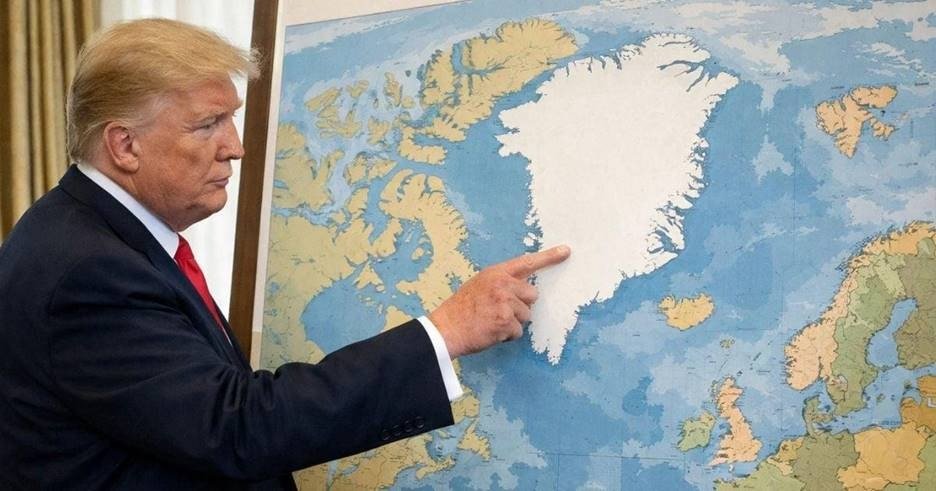
President Donald Trump had insisted that the US needed to acquire Greenland for national security reasons before announcing on Jan. 21 that he had reached a “framework of a future deal” with NATO’s secretary general. He initially considered taking the territory by force.
On Jan. 21, Trump told the World Economic Forum in Davos, Switzerland, that he would rather not use force and that he won’t use violence regarding the U.S. claim to Greenland.
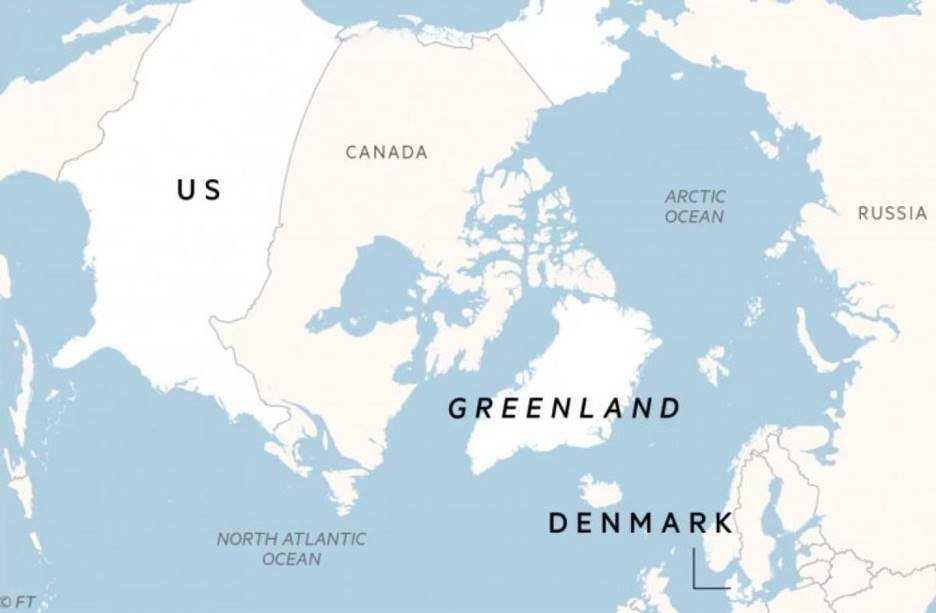
Trump questioned Denmark’s documented ownership of Greenland and suggested that the U.S. needs “ownership to defend” the Arctic island, which is home to 56,000 people, during his initial push to claim it. Some of his allegations lie.
This item presents the president’s comments and facts. That’s why does Trump wants Greenland.
Denmark Owns Greenland
Claim: “Denmark cannot protect that land from Russia or China, and why do they have a ‘right to ownership? ” No written records exist, yet a boat arrived their hundreds of years ago, and we had boats there too.” Trump falsely claims that “no written documents” prove Denmark’s control over Greenland. In a text message to Norwegian Prime Minister Jonas Gahr Støre, Trump falsely claims that “no written documents” prove Denmark’s control over Greenland. by Denmark in a text message to Norwegian Prime Minister Jonas Gahr Støre.
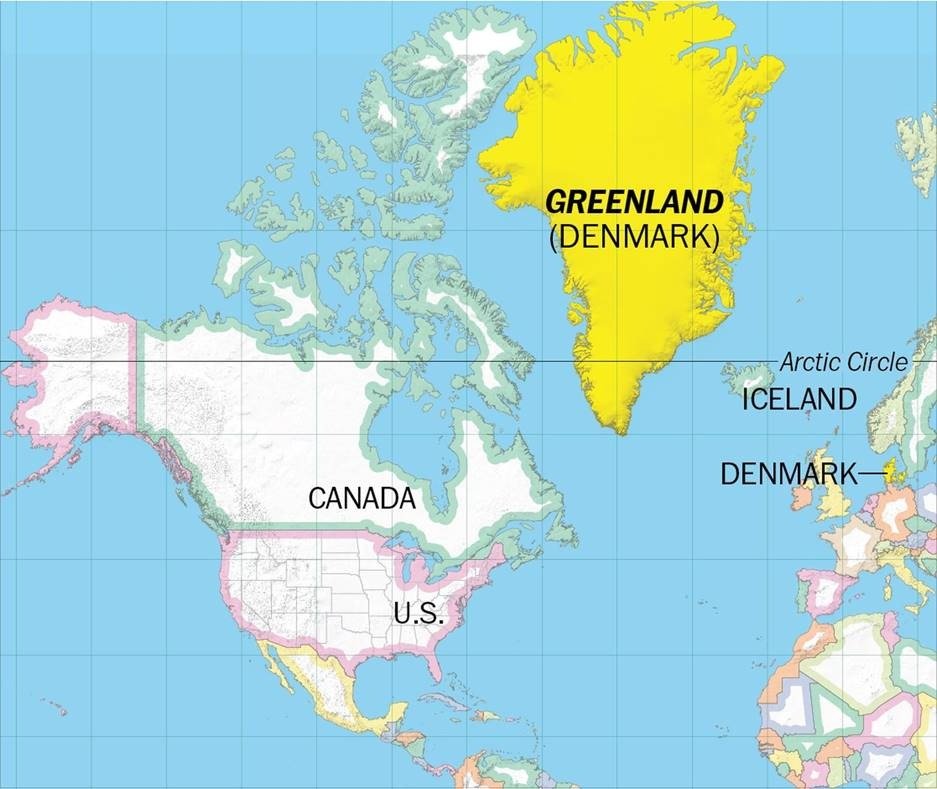
Denmark claims Greenland because Denmark and Norway were united under one monarchy until the early 19th century. Denmark gave Sweden Norway but maintained Greenland, Iceland, and the Faroe Islands in the 1814 Treaty of Kiel, which concluded a period of strife.
On Jan. 21, Jonathan Nackstrand/AFP via Getty Images photographs Nuuk, Greenland, houses illuminated by low winter sunlight at nightfall.
The Permanent Court of International Justice, as it was then known, ruled in 1933 that Denmark had proven it “possessed a valid title to the sovereignty over all Greenland,” citing the Treaty of Kiel.
Greenland became a Danish county in 1953 and had representatives in the Danish Parliament. Greenland got home control and a parliament in 1979. The Self-Government Act of 2009 gave Greenlanders the power to declare independence from Denmark, but they have chosen not to.
Since contemporary times, the U.S. has acknowledged Greenland as Danish territory.
In 1916, after buying the Danish West Indies from Denmark, the U.S. said that “the Government of the United States of America will not object to the Danish Government extending its political and economic interests to the whole of Greenland.”
In a 1941 pact to protect Denmark against Germany, the U.S. “fully recognized” Denmark’s sovereignty over Greenland. Ten years later, the U.S. and Denmark, both new NATO members since 1949, signed an amended defense pact that outlined U.S. military activities in Greenland. The agreement stated that licenses were provided “[w]ithout prejudice to the sovereignty of the Kingdom of Denmark.”
When that agreement was made in 2004, George W. Bush revised the agreement, and once in 2004 under George W. Bush, the U.S. again recognized Greenland as “an equal part of the Kingdom of Denmark.”
Why does Trump want the Greenland-US Military Agreement?
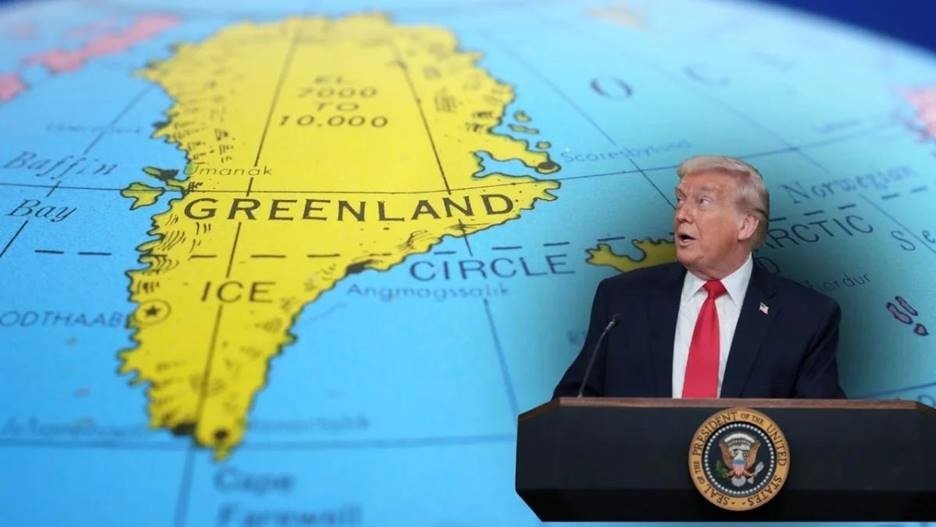
We only want Greenland, with the right title and ownership, because you need ownership to protect it. Leases don’t allow defense. Number one legally. That’s not defendable. Second, psychologically, who wants to defend a license or lease?” At the World Economic Forum on January 21, facts: The U.S. and Denmark have a military access agreement to Greenland. Some analysts doubt the concept that the U.S. needs “ownership” of the island to “defend it.”
The 1951 Defense of Greenland Pact was amended in 2004.
According to briefings by European and U.S. government organizations, the U.S. battled the Soviet Union in the Arctic from Greenland, but after the Cold War, American participation there waned. According to a July Congressional Research Service report, “Over the past 10 to 15 years, the emergence of great power competition and a significant increase in Russian military presence and operations in the Arctic have introduced renewed elements of military tension and competition into the Arctic.”
The U.S. has one base in Greenland, Thule Air Base, renamed Pituffik Space Base in 2023. It monitors space and defends against missiles. As of September, 130 active-duty servicemembers work at Pituffik, the U.S. Department of Defense’s northernmost outpost.
As Trump’s rhetoric about purchasing Greenland escalated last month, Danish authorities and foreign policy professionals cited the pact.
After a Jan. 14 meeting between U.S., Danish, and Greenlandic officials, Danish Minister of Foreign Affairs Lars Løkke Rasmussen said that the U.S. already has extensive military access to Greenland. According to the 1951 military agreement, the U.S. may always seek to increase its presence in Greenland. We want to know whether it has any more demands. We would consider such a request constructively.”
The day prior, Danish European Parliament member Stine Bosse told NATO Secretary General Mark Rutte, “We already have an agreement.” You know it’s from 1951 between Denmark, the Kingdom of Denmark, and the U.S., authorizing the U.S. to deploy all armed forces.
According to Copenhagen’s Danish Institute for International Studies scholar Mikkel Runge Olesen, “The U.S. has such a free hand in Greenland that it can do what it wants.”
We asked the White House whether Trump’s “framework of a future deal” for Greenland extended the present arrangement, but they didn’t respond. Instead, we were told, “If this deal goes through, and President Trump is very hopeful it will, the United States will be achieving all of its strategic goals with respect to Greenland, at very little cost, forever. President Trump proves he’s the dealmaker again. As all parties agree, information will be released.” The New York Times reported on Jan. 22 that those unidentified sources said one discussion objective is granting the U.S. authority over its Greenland military outposts.
Some academics dispute the president’s contention that “you need ownership to defend Greenland.”
Former first-term national security advisor John Bolton termed such a notion “crazy talk.”
Bolton said on CNN on Jan. 21, “If he really believes that you have to own something to defend it, then Japan, South Korea, and many European countries should take notice, as under the Trump view, we apparently need to own those defense facilities as well.”
A 2024 Congressional Research Service investigation found 128 U.S. military sites in 51 nations. The study states that sustaining these facilities is essential for “[a]ssuring allied and partner nations of U.S. security commitments.”
This month, former U.S. ambassador to NATO under President Barack Obama Ivo Daalder told the Wall Street Journal, “Merely suggesting that the U.S. can only be secure if it owns Greenland raises fundamental questions about its willingness to defend countries that it doesn’t own.”
In a Jan. 20 appearance on NewsNation, the claim was made that possessing Greenland will make the Golden Dome more effective. Facts: Trump plans to construct the Golden Dome to defend against missile assaults. Trump was inspired by Israel’s Iron Dome air defense systems, which can intercept rockets, artillery, and mortars.
We have heard from Council on Foreign Relations adjunct senior fellow for military policy Stephen Biddle that the Iron Dome “is not a useful system” for intercepting long-range ballistic missiles from China, North Korea, and Russia.
Todd Harrison, a conservative American Enterprise Institute senior scholar who studies military strategy and space policy, said Greenland activities may assist in detecting missiles.
He said, “Greenland is already used by the United States as a key radar tracking site for homeland missile defense.” “So yes, it would help Golden Dome by continuing to track missiles with Arctic trajectories.”
Harrison disagreed with Trump’s claim that the U.S. couldn’t do this in Greenland.
The president is wrong to say we don’t have access to Greenland for missile defense or that we need to possess it. Harrison informed us his Greenland assertions are untrue.
NATO Funding Claim: “We funded 100% of NATO due to non-payment of bills.” At the World Economic Forum on Jan. 21, this is incorrect. The U.S. did not fund NATO fully.
Trump has misrepresented the U.S. military budget as NATO spending for years. Independent military expenditure by its 32 members is indirect spending, according to the alliance.
According to a December NATO financial report, “US defense expenditure represents approximately two thirds of the Alliance’s defense spending.” However, this is not the amount the US provides to NATO operations, which is shared with all Allies under the concept of common funding.”
Since January, the U.S. pays 15% of NATO’s “common-funded budgets,” including its headquarters’ civil, military, and NATO Security Investment Program budgets, which fund military capabilities and infrastructure. That proportion is based on a cost-sharing mechanism that considers each country’s GDP.
Trump’s first term saw the U.S. pay 22% of NATO’s shared expenditures.
In 2025, the alliance decided that nations should spend 5% of their GDP on military by 2035, up from 2%. Trump has often grumbled that numerous nations have missed their expenditure targets.
Trump said the U.S. has received “nothing” from NATO and that “all we’re asking for is to get Greenland.” NATO members have supported the U.S. militarily. Members sent troops to Afghanistan following the 9/11 terrorist attacks. These are the facts. Why does Trump want Greenland?
