

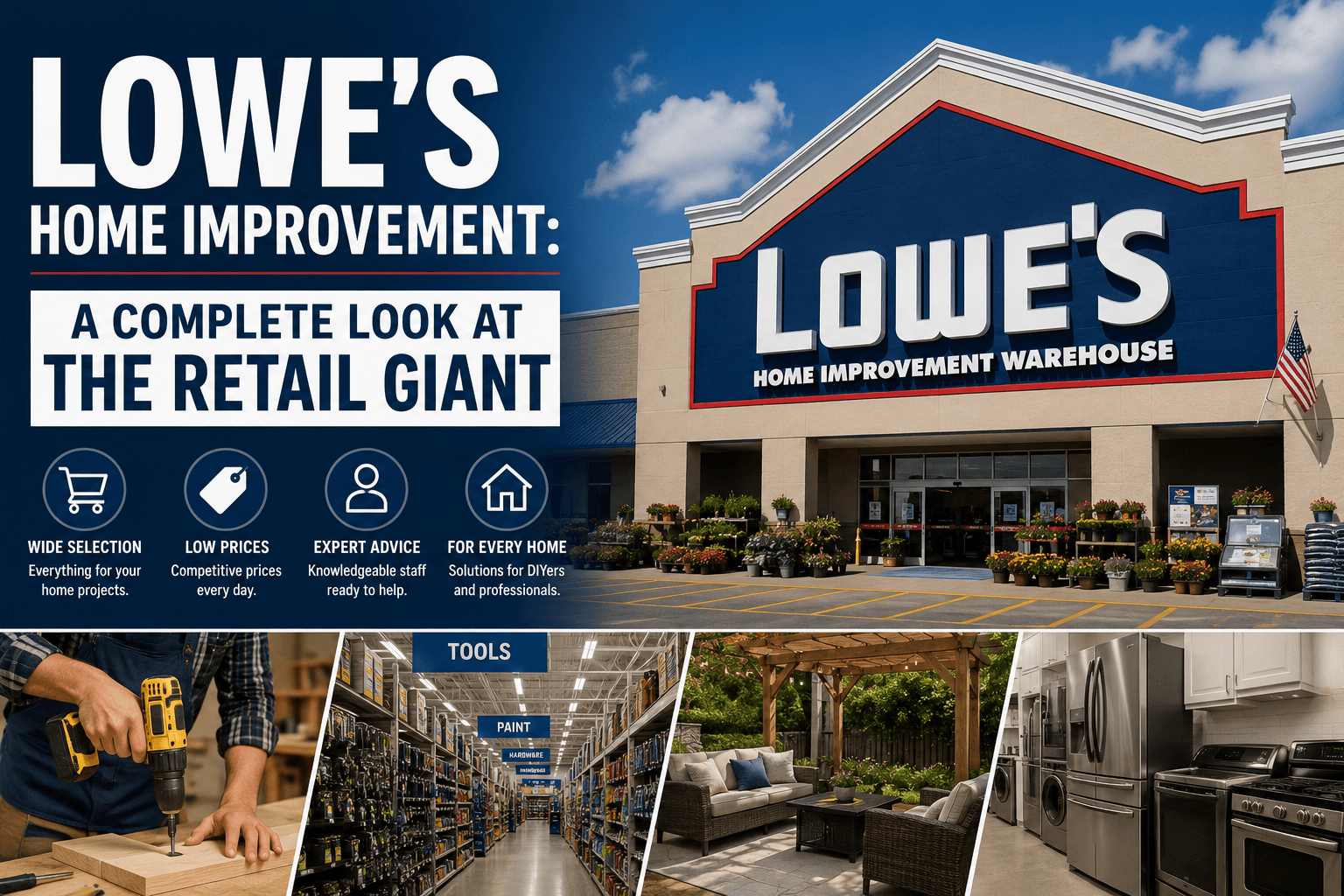
Almost anyone who has tackled a home project in the United States has walked through the doors of a Lowe’s Home Improvement store at some point. Whether it’s picking up a can of paint, replacing a broken faucet, or planning an entire kitchen remodel, the retailer has become one of the go-to names in home improvement shopping. But the story behind how it got there, and what actually sets it apart today, goes a lot deeper than most shoppers realize.
This article takes a closer look at where the company came from, how it grew into a national retail powerhouse, and what makes it a consistent choice for homeowners and professional contractors alike.
How It All Started
The roots of the company trace back to 1921, when Lucius Smith Lowe opened a small hardware store called Lowe’s North Wilkesboro Hardware in Wilkes County, North Carolina. In its earliest days, the store wasn’t just selling nails and tools. It also carried sewing notions, dry goods, horse tack, and even groceries, serving the everyday needs of local farmers and tradespeople in the area.
After L.S. Lowe passed away, his son Jim Lowe took over the business in 1940. Not long after, Jim brought his brother-in-law, Carl Buchan, on as a partner. Buchan is often credited with reshaping the company’s direction, anticipating the massive wave of construction that followed World War II and steering the business specifically toward home improvement products rather than general goods.
The Shift Toward Modern Retail
That strategic pivot turned out to be exactly right. As returning veterans and growing families needed materials to build and renovate homes across the country, Lowe’s positioned itself to meet that demand directly. In 1952, the company opened its first official Lowe’s Home Improvement Warehouse in Charlotte, North Carolina, marking a clear shift away from the traditional small-town hardware store format toward something closer to the large retail centers people recognize today.
The company went public in 1961, which gave it the capital needed to expand well beyond North Carolina. Throughout the following decades, Lowe’s steadily grew its footprint, particularly in the 1980s and 1990s as it pushed into new regions across the Midwest and West Coast. By the mid-2000s, the retailer had grown to more than 1,300 locations, cementing its place as one of the two dominant names in home improvement retail nationwide.
Growing Into a National Powerhouse
Today, Lowe’s Home Improvement operates well over 1,700 stores across the United States, generating tens of billions of dollars in annual revenue. That scale puts it firmly in competition with Home Depot, the other major player in the space, though the two companies have carved out slightly different reputations over the years.
Lowe’s has traditionally leaned into being especially welcoming to everyday do-it-yourself customers, while still maintaining a strong base of professional contractor business. This dual focus means the average store is designed to serve both a homeowner picking out light fixtures for a weekend project and a contractor buying lumber in bulk for a job site.
What You’ll Actually Find Inside
Walking into a typical Lowe’s Home Improvement location, the range of products can be genuinely surprising if you haven’t been in a while. Beyond the expected aisles of tools, hardware, and building materials, most stores carry full sections dedicated to flooring, paint, plumbing, electrical supplies, and major appliances like refrigerators, washers, and dryers.
Outdoor living has also become a significant part of the business, with garden centers, patio furniture, grills, and seasonal decor taking up substantial floor space depending on the time of year. For bigger projects, many locations offer kitchen and bath design centers where customers can work with staff to plan out full renovations, right down to cabinet styles and countertop materials.
Services That Go Beyond Just Shopping
One thing that sets this retailer apart from a purely transactional store is the range of services available alongside the products themselves. Installation services are a major part of this, covering everything from flooring and countertops to HVAC systems and water heaters, often connecting customers with vetted local professionals to complete the work.
Tool and equipment rental is another commonly used service, letting customers borrow items like pressure washers, tile saws, or aerators for short-term projects without having to buy something they might only use once. Many stores also offer project consultation, where staff help customers figure out exactly what materials and quantities they need before checkout, which can save a lot of guesswork on bigger jobs.
The Move Into E-Commerce
Like most major retailers, the company has invested heavily in its online presence over the past couple of decades. Lowes.com launched back in 1995, making it one of the earlier big-box retailers to establish a digital storefront. Since then, the online side of the business has grown into a full shopping experience, complete with detailed product research tools, customer reviews, and the ability to check real-time inventory at nearby stores.
The combination of physical stores and online ordering has become especially important for larger purchases like appliances or bulk building materials, where customers often want to research extensively online before finalizing a purchase in person or picking up curbside. This blended shopping approach reflects a broader shift in how people approach home improvement projects, researching online but still valuing the ability to see and touch products before committing.
Serving Contractors as Well as Homeowners
While plenty of people associate this retailer primarily with weekend DIY projects, the professional contractor side of the business is substantial. Lowe’s operates a dedicated program for trade professionals that offers volume pricing, dedicated account support, and faster checkout processes designed around the needs of people buying materials regularly for job sites rather than personal projects.
This dual customer base, DIY shoppers on one side and professional tradespeople on the other, has shaped how stores are laid out and staffed. It’s part of why a single Lowe’s Home Improvement location can feel just as useful to someone building a deck for the first time as it does to an experienced contractor restocking supplies for multiple ongoing jobs.
Sustainability and Community Involvement
In recent years, Lowe’s has also put noticeable effort into sustainability initiatives, including reducing waste in its supply chain, improving energy efficiency across stores and distribution centers, and expanding its selection of environmentally conscious products. This includes everything from energy-efficient appliances to sustainably sourced lumber options for customers who prioritize those choices.
Community involvement has also been a long-standing part of the company’s identity, going back to programs supporting employees during financial hardship and extending into broader charitable and disaster relief efforts over the years. This community-focused approach has helped reinforce the brand’s reputation as more than just a place to buy hardware, but as a company genuinely invested in the neighborhoods where its stores operate.
Why It Remains a Trusted Choice
Part of the reason the company has maintained such a strong reputation comes down to consistency. Whether someone walks into a store in a small town or a major city, they can generally expect the same core layout, similar product availability, and comparable service standards. That predictability matters a lot to customers who are already dealing with the stress of a home project and don’t want to add store navigation to their list of problems.
Price competitiveness also plays a role, with the company regularly running promotions and seasonal sales that make it easier for budget-conscious homeowners to justify bigger purchases like appliances or outdoor equipment. Combined with financing options for larger projects, this pricing strategy has helped Lowe’s stay accessible to a wide range of customers, not just those with unlimited renovation budgets.
Looking at the Bigger Picture
From a single hardware store in North Carolina to a company generating tens of billions in annual revenue, this growth reflects broader changes in how Americans think about their homes. As DIY culture has grown alongside a steady demand for professional renovation work, the company has adapted its stores, services, and online tools to keep pace with both trends at once.
That adaptability is likely a big part of why Lowe’s Home Improvement continues to hold such a strong position in a competitive retail market. Rather than sticking rigidly to one identity, the company has consistently evolved its offerings, from adding installation services to expanding its digital shopping experience, while still holding onto the core idea it was built on: helping people take care of their homes.
Final Thoughts
Lowe’s Home Improvement has come a long way from its origins as a small hardware store serving local farmers in North Carolina. Today, it stands as one of the most recognizable names in home improvement retail, balancing the needs of everyday homeowners with those of professional contractors under one roof. Its blend of physical stores, robust online shopping, and hands-on services has helped it remain relevant through decades of change in how people shop and renovate. For anyone planning a home project, big or small, understanding what this retailer actually offers can make the process a whole lot smoother.
