

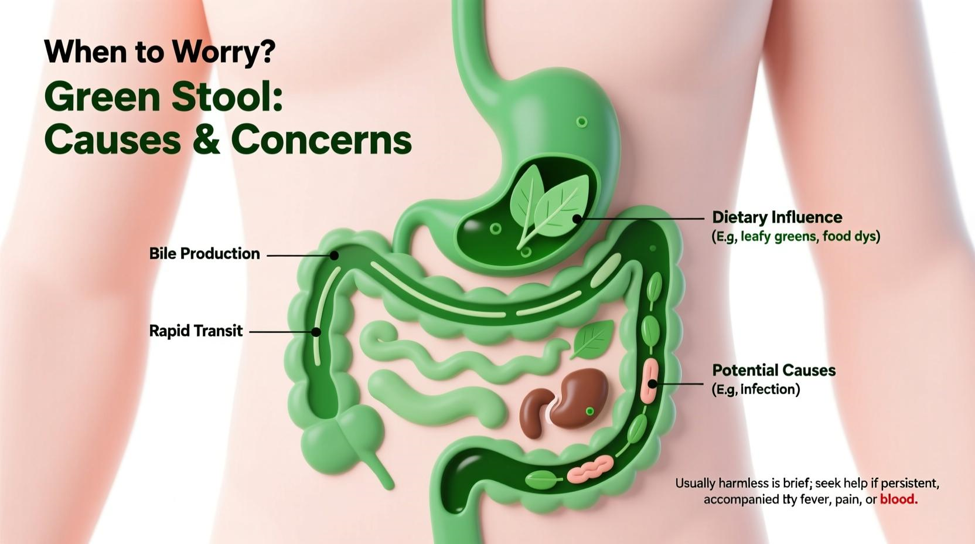
Why is my poop green? The stool is available in various colors. All hues of brown, including green, are regarded as the usual kind. Stool color is an indicator of a potentially dangerous intestinal illness, although it occurs very seldom. Your feces’ color is usually determined by your diet and the amount of bile, a reddish-green fluid that digests lipids. When bile moves through your digestive system, enzymes cause it to undergo a chemical transformation, which causes the color of the bile to convert from green to brown. Should you be worried about the color of your feces, why is my poop green? You should see a healthcare specialist. It is imperative that you seek immediate medical assistance if the color of your feces is vivid red or black, since this might be an indication that blood is present.
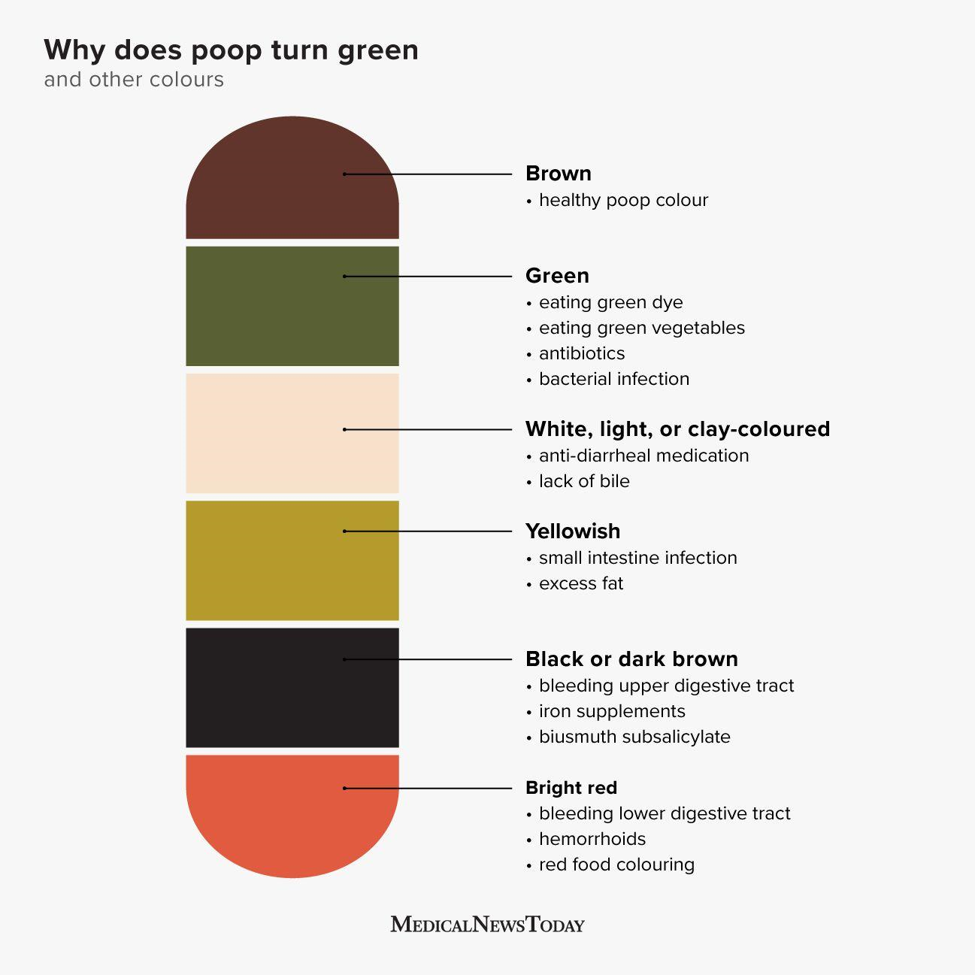
The consumption of dark green vegetables, such as spinach and kale, is often associated with the occurrence of intermittent green stool in individuals who are otherwise healthy. The fast transit of green bile from the small intestine that occurs when a person has diarrhea is another factor that contributes to the appearance of green chow. As an additional potential cause of greenish-colored feces, some medications, such as bismuth subsalicylate (Pepto-Bismol), iron supplements, and certain antibiotics, may potentially be responsible.
Green Poop: What’s Going On?
There is a potential cause for concern if you suddenly become aware that your feces have taken on a green hue. For the most part, however, it is not a significant reason for worry.
Why is my poop green?
Because they have a lot of chlorophyll, eating many leafy greens like broccoli, spinach, and kale can make your stool green. The color that plants have comes from a chemical called chlorophyll.
Coloring foods green and blue:
Adding artificial food coloring to food can make your stool turn green. This is often in drinks, cake frosting, fruit snacks, candy, and freeze pops. The green tea matcha powder can make you see green in the toilet. Blueberries and blackberries, which are naturally blue, can quickly turn regular medium- to dark-brown stool green.
A very light brown stool
The presence of pale stools may indicate liver or gallbladder diseases. If the liver doesn’t make enough bile or if the bile duct is blocked, the bile salts that are needed for digestion can be greatly reduced. Hepatitis, cirrhosis, and gallstones are some examples of illnesses that may sometimes result in the appearance of pale stools. People with pale stools due to one of these conditions commonly experience jaundice (yellowing of the skin and whites of the eyes) and cola-colored urine.
A stool that is yellow
Yellow stools may be caused by an excessive amount of fat in the feces. An exceptionally high-fat diet could induce the hue shift. However, if feces is yellow, oily, floats in the toilet bowl, and smells foul, it generally suggests there is an issue with fat absorption. This condition may develop from liver illness, pancreatitis, a bile or pancreatic duct obstruction, or a small intestinal ailment such as celiac disease. Some illnesses such as giardiasis may also produce yellowish stool. Feces that are red-red feces always increase the likelihood that there is blood present in the stool.
Most of the time, hemorrhoids cause the small amounts of blood that are seen in the toilet bowl or on the toilet paper. Always contact a medical professional immediately if you notice a larger amount of bright red blood. It is necessary to do an emergency examination if the individual additionally experiences lightheadedness. If you have chronic or repeated bleeding from the rectal area, even if it is just a little quantity, you should schedule an appointment with your primary care physician. Additionally, red feces may be caused by certain red foods, such as beets and tomatoes, as well as by red food dyes.
Black Poop
It is possible that bleeding from the stomach or upper small intestine is the cause of foul-smelling, stinking, and tarry black feces. Due to the presence of digestive enzymes and stomach acid, the color of blood changes from red to black. Under no circumstances does this condition call for rapid medical intervention. It is possible for activated charcoal, bismuth subsalicylate (Pepto-Bismol), and iron supplements to cause a darkening of the feces. As other potential reasons, blood sausage, blueberries, and black licorice are also considered.
